


Independence Hall, Philadelphia
- Interspace & Power

- Feb 15, 2025
- 3 min read
Updated: Feb 16, 2025
Location: Philadelphia, Pennsylvania, USA
Architect: Edmund Woolley
Style: Georgian
Completed in: 1753
Designation: UNESCO World Heritage Site (as part of Independence National Historical Park)

Independence Hall, located in Philadelphia, Pennsylvania, is a historic site pivotal to the founding of the United States. The building is famously recognized as the location where the Founding Fathers of the United States debated and adopted both the Declaration of Independence and the Constitution. The building is designated as a UNESCO World Heritage Site as part of Independence National Historical Park.
The Independence Hall was built in 1753 as the Pennsylvania State House, the first capitol of the colonial-era of the Province of Pennsylvania. It was designed by an English-born American architect, Edmund Woolley in the Georgian architectural style. This architectural style was popular in the American colonies during the reigns of King George I, II and III in the 18th century, as can be seen in the examples below.


The northern façade exhibits characteristic architectural elements of the Georgian style, including a symmetrical design and double-hung windows symmetrically arranged on either side of the entrance. Each window is adorned with a marble keystone.

The southern façade features the Palladian window on the second floor, an elegant design distinguished by a large central arched opening accompanied by two smaller rectangular windows on either side.
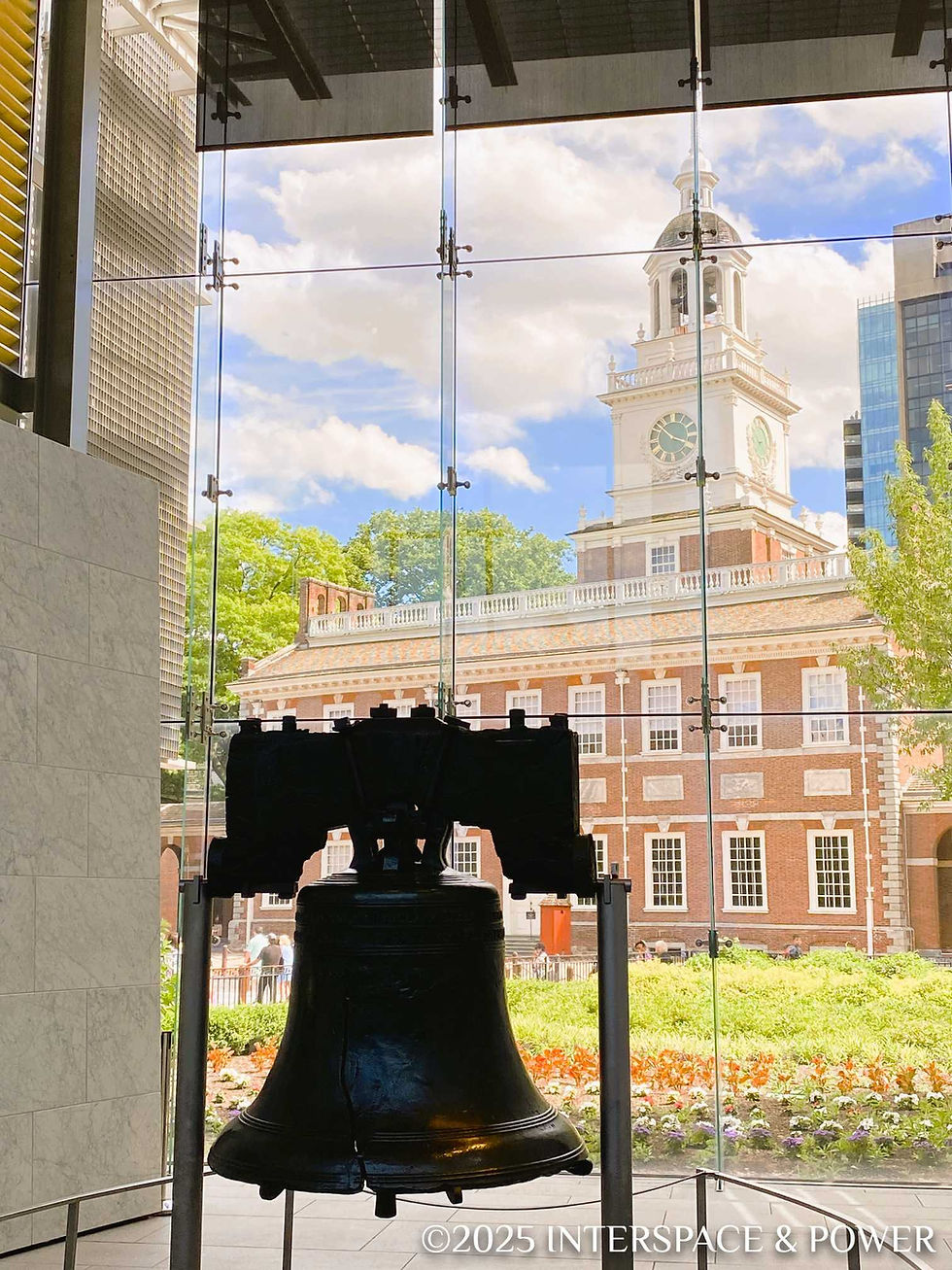
The tower is best known for housing the "Liberty Bell", a symbol of American independence. The tower's design reflects colonial architectural styles, characterized by its elegant proportions and classical details. The Liberty Bell is now housed in the Liberty Bell centre across the street from the Independence Hall.

Upon entering the building from the south side, one first encounters the Tower Stair Hall, followed by the Central Hall located further to the north.

The interior of Independence Hall which was built in the Georgian style showcases a robust and ornamental character, distinguishing it from the Federal-style architecture that gained popularity after the American Revolution in the United States.

Adjacent to the Hall's eastern side lies the "Assembly Room," which served as the meeting place of the Second Continental Congress (1775 to 1783) and the site where both the Declaration of Independence (1776) were debated and adopted and the U.S. Constitution (1787) was signed. The room features period furnishings, including George Washington’s “Rising Sun” chair, and is arranged as it would have been during these pivotal moments in American history.


The Rising Chair is a historic symbol of American independence and democracy. This iconic chair features a sun emblem on its backrest, which is often interpreted as representing the dawn of a new nation. It was famously used by George Washington during the Constitutional Convention in 1787, marking its significance as a backdrop for the birth of the United States Constitution. The chair embodies the ideals of liberty and governance, serving as a poignant reminder of the struggles and aspirations of the founding fathers.


Opposite the Assembly Room in the Central Hall is the Supreme Court Chamber. This historic courtroom was where colonial and early American justice was administered. It features period furnishings, including a judge's bench and bar enclosure, reflecting the legal traditions of the time. The room played a significant role in shaping early American law and governance during the Revolutionary era.

References:
National Historic Park (2014). Independence: The Park in Pictures. Eastern National.
National Park Service. (n.d.). Independence Hall: Architecture. U.S. Department of the Interior. Retrieved February 15, 2025, from https://www.nps.gov/inde/learn/historyculture/places-independencehall-architecture.htm
Wikipedia contributors. (n.d.). Independence Hall. In Wikipedia. Retrieved February 15, 2025, from https://en.wikipedia.org/wiki/Independence_Hall


Comments